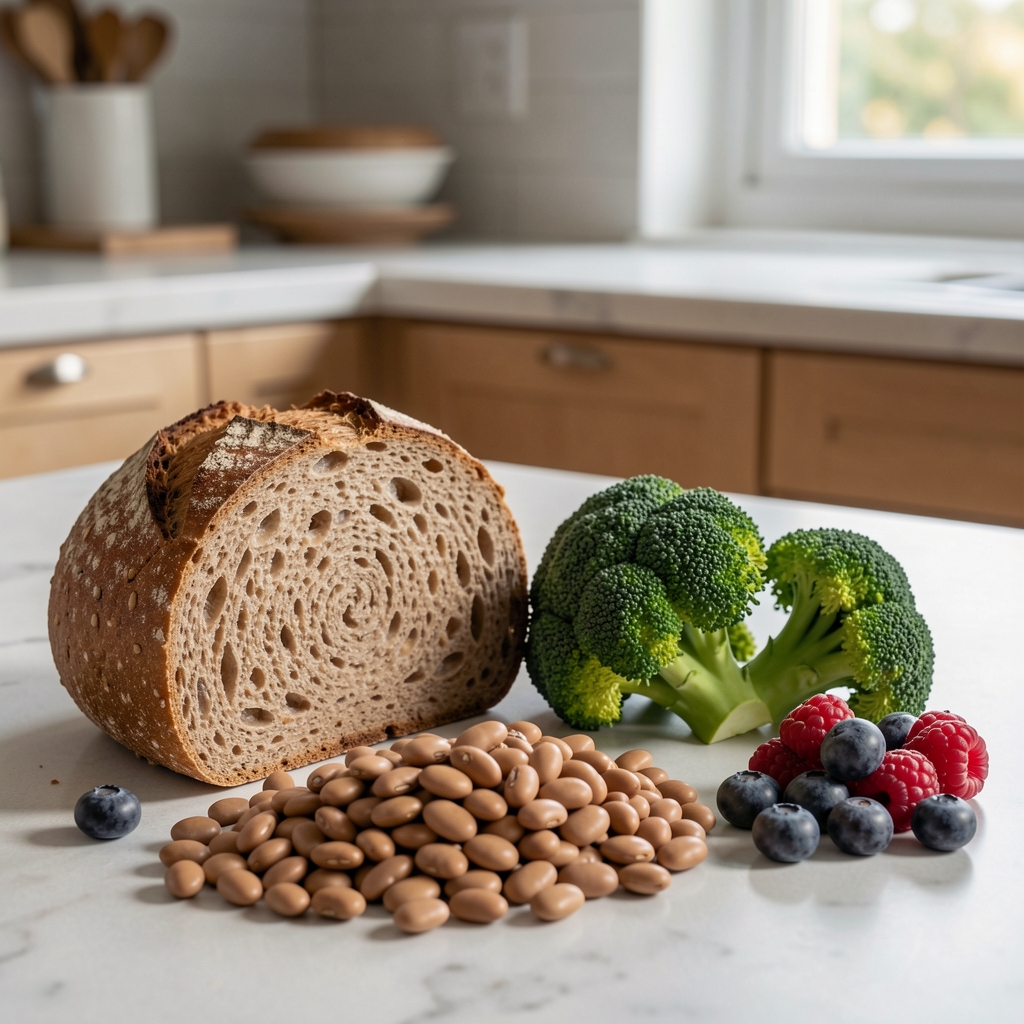
Fibre and variety
Vegetables, pulses, fruit, nuts and whole grains provide fibre and a broad range of nutrients. Increase fibre gradually and drink enough fluid for your circumstances.
Food, hydration, movement and clinical conversations all sit within a wider picture of prostate health. This guide explains what lifestyle information can and cannot do.

Urinary changes, pelvic discomfort and sexual symptoms can have several causes. Nutrition may support general health, but it is not a diagnostic tool. A GP can listen to the pattern, review medicines and decide whether examination or testing is appropriate.
For UK readers, NHS advice is a useful starting point when symptoms are new, persistent or affecting daily life.
Vegetables, pulses, fruit, nuts and whole grains provide fibre and a broad range of nutrients. Increase fibre gradually and drink enough fluid for your circumstances.
Some people find that spreading drinks through the day and reducing late evening fluids helps night-time routines. Individual advice matters if you have heart or kidney conditions.
Regular activity supports cardiovascular and metabolic health, which are connected to sexual and urinary well-being.
| Observation | Useful question |
|---|---|
| Night-time urination | Could medicines, fluids, sleep or another condition be contributing? |
| New discomfort | Which changes should prompt a quicker review? |
| Supplement interest | Could this product interact with my medicines or tests? |
Products marketed for men’s health often use confident language while offering limited context. Check ingredients, dosage, warnings and the identity of the seller. Tell a pharmacist or clinician about supplements, especially before a procedure or when taking prescribed medicine.
Continue to the virility desk